
Go-To-Market Strategy Explained: What It Is and How to Create One for Your Business


The 10 Step Go To Market Strategy
Table of Contents
Serious about growing your business? Let’s plan exactly how to get you more leads, sales, and results—faster.
A go-to-market (GTM) strategy is your roadmap for launching a new product or service successfully. It defines how you’ll reach the right customers, with the right message, at the right time.
Even great products fail without a plan. According to McKinsey & Company, over 40% of new product launches fail due to poor market execution.
Take Oatly, for example. When the brand entered the U.S. market, it skipped expensive ads and went straight to coffee shops.
By targeting baristas and latte lovers, Oatly built demand from the ground up and grew fast, before competitors caught on.
That’s the power of a focused go-to-market strategy.
In this guide, I’ll break down what a GTM strategy really means, why it matters, and how to build one step by step.
You’ll also see real B2B and SaaS go-to-market strategy examples—and get a simple GTM framework you can adapt for your next product launch.
By the end, you’ll have a practical plan you can execute, not just theory to read.
What Is a Go-To-Market Strategy and Why Does it Matter?
A go-to-market (GTM) strategy is your action plan for how a product or service will reach the right customers and drive revenue.
In simple terms, it’s the bridge between your product, audience, message, sales channels, and growth goals.
It’s more than just a marketing plan. A GTM strategy connects your product, sales, marketing, and operations to ensure every part of your business moves in the same direction when you launch.
Think of it as the blueprint for turning your idea into a profitable reality.
A strong go-to-market plan answers four key questions:
- What are you selling, and what problem does it solve?
- Who is your target customer?
- Why should they buy from you instead of others?
- How will you reach and convert them?
Whether you’re creating a B2B GTM strategy, launching a SaaS go-to-market plan, or entering a new market, these four questions define your foundation.
And yet, most businesses still skip this step.
As mentioned earlier, the average failure rate of new product launches across industries is over 40%.
That’s exactly what a go-to-market strategy prevents.
It gives you a proven framework to position your offer, reach your audience, and win customers faster, without wasting time or budget.
When Do You Need a Go-To-Market (GTM) Strategy?
You need a go-to-market strategy every time you introduce something new—whether it’s a product, service, or market expansion.
Use a GTM plan when you:

- Launch a new product in an existing market.
- Take an existing product to a new market or region.
- Test a new product in a completely new market.
It’s not just for startups or SaaS businesses.
Even established brands rely on updated go-to-market strategies as customer behaviour, competition, and market conditions change.
For example, when Netflix expanded from DVDs to streaming, they didn’t reuse their old marketing playbook.
They built a fresh GTM strategy that redefined how people consumed content—and how the brand positioned itself.
Markets evolve fast.
What worked last year might not work now.
That’s why you need a go-to-market plan every time you enter a new space, target a new segment, or launch a new offer.
A strong go-to-market framework helps you reduce risk, avoid guesswork, and launch with clarity—whether you’re running a B2B GTM strategy or a SaaS go-to-market plan.
How to Create a Go-To-Market Strategy (Step-by-Step)
If you’re wondering how to create a go-to-market strategy for your business, this section walks you through exactly how to build one step by step.
Each stage helps you move from idea to execution, so your next product launch has direction, clarity, and real traction.
STEP 1: Define Your Business Goals
Before anything else, connect your go-to-market strategy to your larger business goals.
Your GTM plan should directly support what your company wants to achieve — whether that’s:
- Growing revenue
- Entering a new market or region
- Increasing brand awareness
- Launching a new product line
Ask yourself:
- Does this launch align with our long-term business vision and available resources?
- What metrics define success — leads, conversions, or retention?
At Credofy, we always start every GTM project here. If you’re not clear on the “why,” the “how” won’t stick.
Related Read: Struggling to Grow Your Business Online? These 3 Golden W’s Will Fix It
Marketing Research & Strategy
We help you understand your market and build smart strategies to attract more customers and grow faster.
- Detailed research into your competitors, customers, and market
- Custom marketing and growth plans that drive real results
- Clear action steps to increase traffic, leads, and sales

ADWORDS ROI

Cut Ad spend

STEP 2: Identify the Problem You’re Solving
Every successful go-to-market plan begins with one core question:
What problem does your product or service actually solve?
If you can’t answer that clearly, your audience won’t see the value.
Your GTM strategy should focus on connecting your product’s solution to your customer’s pain point.
Examples:
- Uber → made transportation instant, affordable, and on-demand.

Source: Uber
- Apple → turned premium design and experience into a lifestyle choice.

Source: Apple
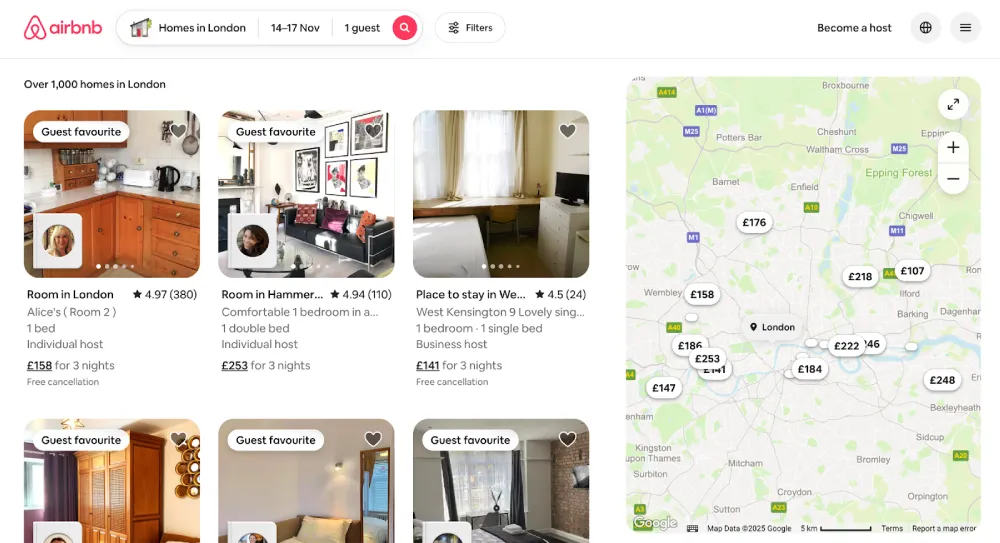
- Airbnb → solved the problem of expensive, impersonal hotels by offering affordable stays with local hosts.
Source: Airbnb
The clearer your value proposition, the easier it is to craft your messaging, choose marketing channels, and position your offer in the market.
STEP 3: Segment Your Market
Once you know your goal and your product’s value, the next step is to define your target audience.
A winning go-to-market strategy never tries to reach everyone — it focuses on the right people.
For B2B businesses, segment your market by:
- Firmographics: industry, company size, and location.
- Needs-based: challenges, goals, or specific pain points.
- Technographics: what tools, systems, or technologies they already use.
For B2C businesses, segment your market by:
- Demographics: age, income, gender, or region.
- Psychographics: interests, attitudes, and lifestyles.
- Behavioural patterns: buying habits, online activity, and brand loyalty.
Example:
Airlines segment leisure travellers by purpose (vacation vs. family), spending range, and timing.
They then tailor their messaging — offering discounted early-bird deals to planners and last-minute offers to impulse travellers.
That’s the same logic behind every B2B go-to-market strategy or SaaS go-to-market plan — speak directly to each audience’s goals and timing.
Digital Marketing, SEO & PPC
- SEO to boost rankings and capture high-intent, AI-driven traffic
- Performance Marketing to run ROI-focused campaigns that convert
- Content Marketing to drive clicks, earn links, and build authority

STEP 4: Research Competition and Market Demand
Once you’ve defined your audience, the next step is to understand the market you’re entering.
Researching competitors helps you spot gaps, opportunities, and positioning angles you can use to stand out.
Ask yourself:
- Who are the main players in this space?
- Where are they strong — and where do they fall short?
- How crowded is the market?
- What are customers still frustrated with?
The goal is to find your edge.
You don’t need to reinvent the wheel — just find a smarter, more specific angle.
Hotel brands often research their competitors to identify untapped traveller segments, like digital nomads or short-stay business guests who need flexible check-ins and workspace access.
By catering to these overlooked audiences, they capture a loyal niche before others even notice.
The same principle applies to any business: know what’s already working, what isn’t, and where you can create new value.
STEP 5: Define Your Target Audience & Value Proposition
Once you understand your market and competitors, define who you’re selling to and why they should choose you.
This step connects your audience insights to a clear, customer-first message.
Create User Personas
A user persona is a semi-fictional profile of your ideal customer.
It keeps your marketing, sales, and product teams focused on the right audience.
Each persona should outline:
- Demographics: Age, job, income, and location
- Goals: What they want to achieve
- Pain Points: Problems holding them back
- Motivations: What drives their decisions
- Preferred Channels: Where they spend time online
For one of our real estate clients, we built detailed personas to guide their GTM campaign, including:
John Mitchell – “Secured Retirement Income”
55-year-old executive focused on safe, low-risk property investments for retirement.
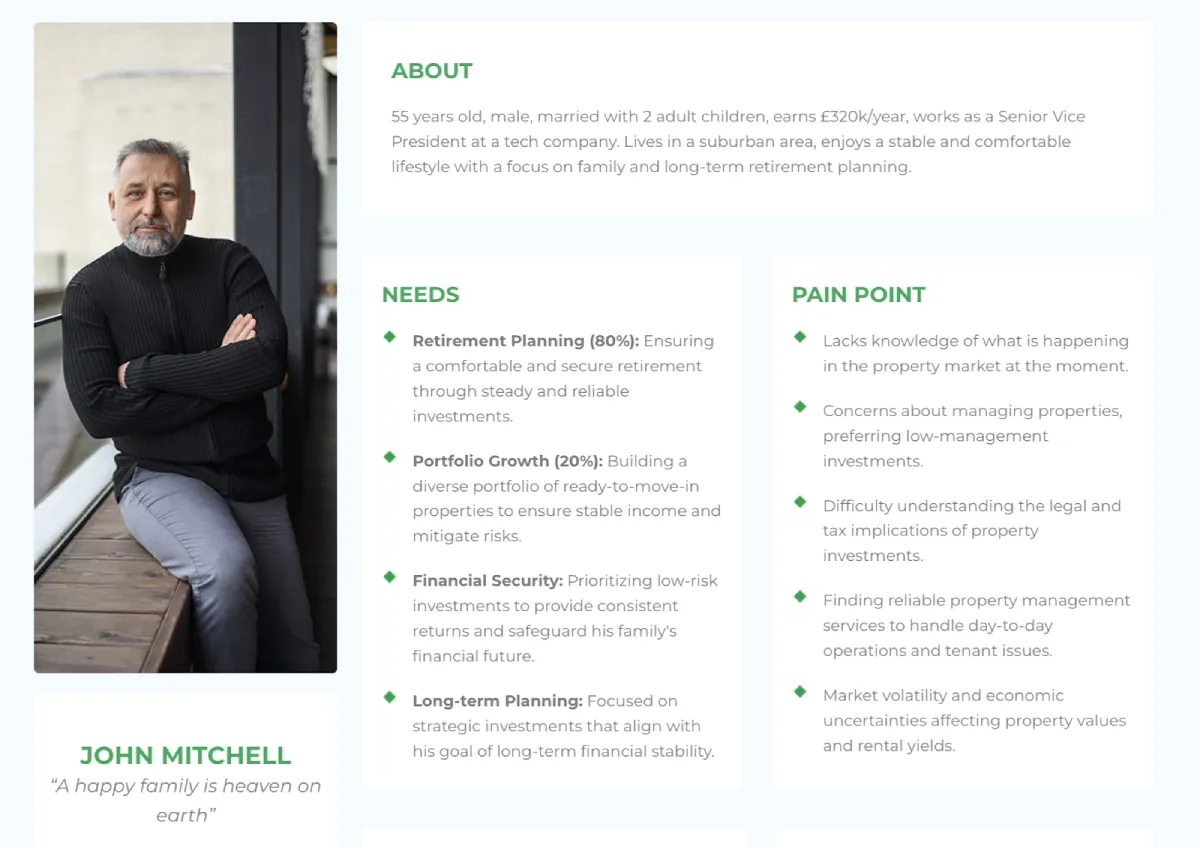

Pain Points
Market uncertainty and complex management.

Message
“Smart, low-maintenance property investments that secure your family’s future.”
Sarah Jenkins – “High-Growth Property Investor”
31-year-old analyst seeking high-return, off-plan opportunities.
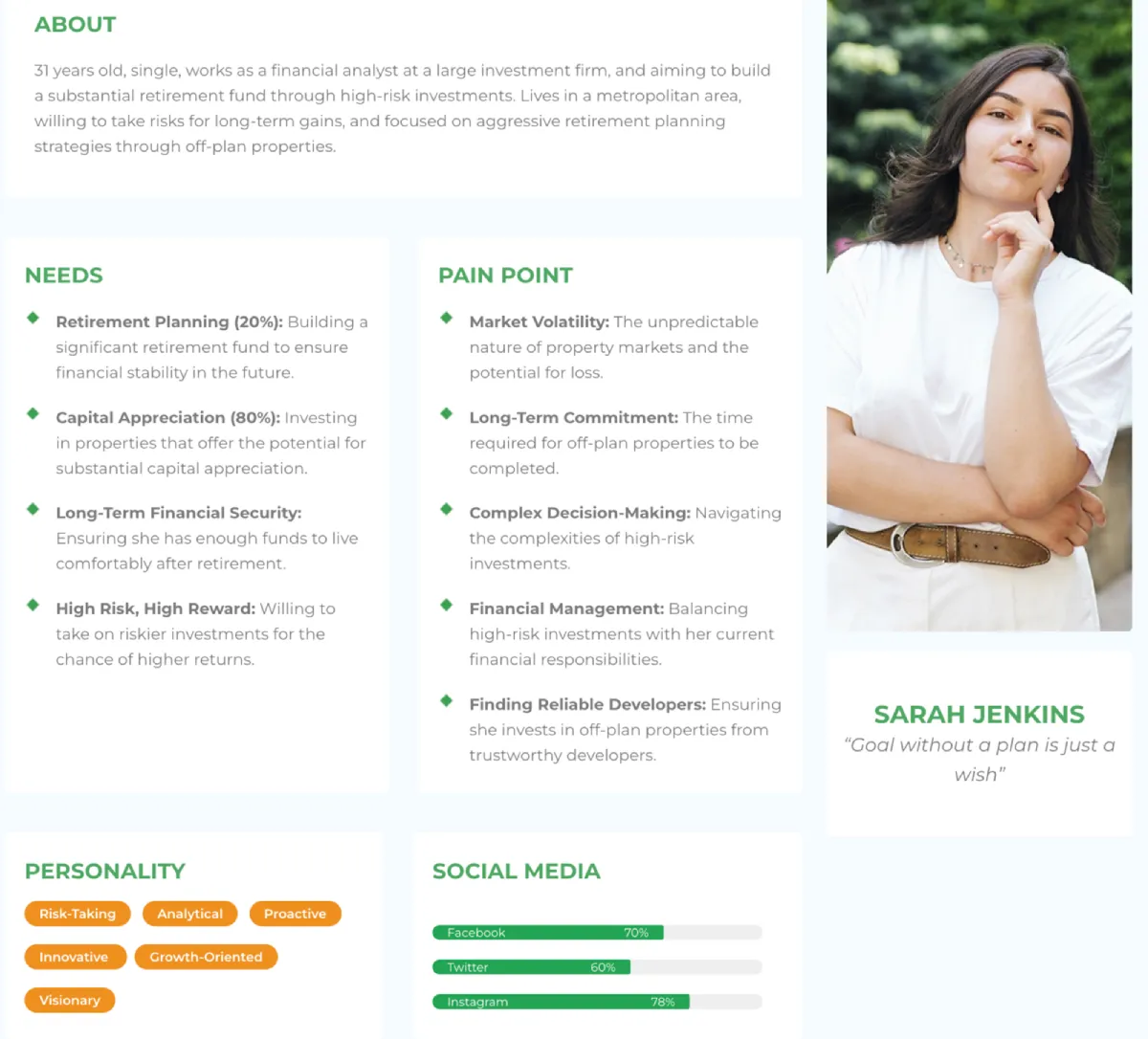
Pain Points
Volatility, trust in developers, and long-term commitment.
Message
“Invest early. Build wealth faster with data-backed opportunities.”
These personas helped tailor content and offers for different mindsets — boosting lead quality and conversions.
For a full breakdown, go here: https://credofy.com/flambard-williams-case-study
Define Your Value Proposition
Your value proposition is the one line that explains what you do, who it’s for, and why it matters.
It should be:
- Simple: Clear in one sentence
- Specific: Focused on one main benefit
- Customer-First: Speaks to their problem
Example:
“Slack — the easiest way for teams to communicate and collaborate.”
Use a Value Matrix
Link your customer’s problem to your solution and message:
| Problem | Solution | Message |
| “Managing projects takes too much time.” | One platform to plan, track, and collaborate. | “Simplify your workflow — manage everything in one place.” |
| “We don’t know which campaigns drive results.” | Built-in analytics to measure performance. | “See what works. Invest where it counts.” |
When your personas and value proposition align, your GTM message becomes sharper, more relevant, and easier to convert.
Also Read: 20 Advanced Lead Generation Strategies to Secure High-Quality Leads in 2025
STEP 6: Map the Customer Journey
Next, outline how your customer moves from discovery to purchase.
Mapping this journey ensures your content, sales, and marketing all work together — guiding prospects smoothly from awareness to decision.
A good go-to-market framework follows a clear funnel:
| Funnel Stage | Goal | Example Activities |
| Top of Funnel (Awareness) | Get discovered and build interest | SEO, blogs, social media, PR, educational videos |
| Middle of Funnel (Consideration) | Build trust and show value | Case studies, reviews, webinars, comparisons |
| Bottom of Funnel (Decision) | Convert interest into sales | Free trials, demos, consultations, and limited-time offers |
For example, a real estate business might attract leads with blogs like “Top Investment Locations in 2025” (awareness), build trust through client success videos (consideration), and close deals with free property evaluations or site visits (decision).
When you map this journey, every step serves a purpose — not just to attract attention, but to move customers closer to a decision.
STEP 7: Choose Your Sales Strategy
Once you’ve defined your audience and message, decide how you’ll actually sell your product or service.
Your sales model depends on your product type, price point, and customer expectations.
Here are the four most common go-to-market sales models:
| Sales Model | How It Works | Best For |
| Self-Service | Customers buy directly through your website or app. | E-commerce stores, SaaS free trials, digital products. |
| Inside Sales | Sales reps close deals remotely through calls or demos. | B2B SaaS companies or service-based businesses. |
| Field Sales | High-touch, in-person sales process. | Enterprise clients, real estate, or high-ticket services. |
| Channel Sales | Selling through third-party partners or distributors. | Consumer goods, tech hardware, or regional expansion. |
Most businesses don’t rely on just one sales model.
For instance, a health and wellness brand might sell supplements or fitness plans directly through its bespoke website (self-service), while offering personalised coaching through trained consultants (field sales).
Similarly, a real estate firm could handle digital leads through inside sales and close premium listings through in-person consultations.
The goal is simple: choose the mix that fits your product, price point, and audience.
The right sales model keeps your go-to-market strategy lean, scalable, and focused on closing the right customers faster.
Recommended Read: How Late Response Times Are Costing Your Business Over 70% of Leads
STEP 8: Select Marketing Channels
Once you know how you’ll sell, it’s time to plan how you’ll attract and convert customers.
Your go-to-market marketing strategy should focus on channels where your target audience already spends their time.
Here’s a quick breakdown:
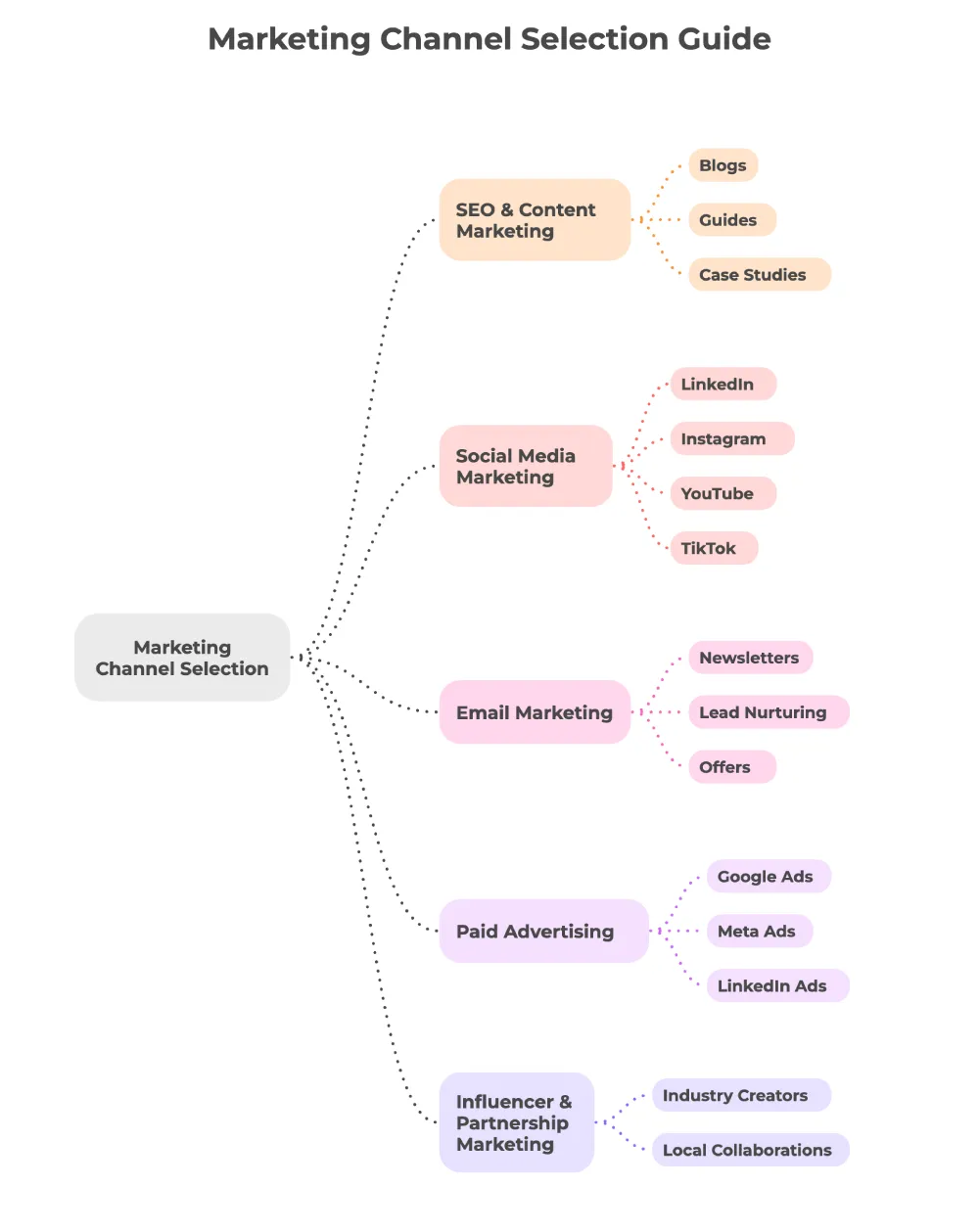
| Channel Type | Examples | When to Use |
| SEO & Content Marketing | Blogs, guides, case studies | Build long-term visibility and organic leads. |
| Social Media Marketing | LinkedIn, Instagram, YouTube, TikTok | Create awareness and engagement. |
| Email Marketing | Newsletters, lead nurturing, offers | Convert interested leads and retain customers. |
| Paid Advertising | Google Ads, Meta Ads, LinkedIn Ads | Drive immediate visibility and test demand quickly. |
| Influencer & Partnership Marketing | Industry creators or local collaborations | Build trust and reach niche audiences. |
For B2B go-to-market strategies, platforms like LinkedIn, webinars, and email automation work best.
For B2C go-to-market strategies, focus on Instagram, YouTube, and influencer partnerships to reach customers faster.
Also, clarify whether you’ll use:
- Inbound marketing (attracting leads through valuable content and SEO), or
- Outbound marketing (direct outreach, ads, and cold campaigns).
The most effective GTM plans combine both — inbound builds credibility, outbound drives momentum.
Related Read: How Much Do Google Ads Cost in 2025?
STEP 9: Set Your Pricing Strategy
Your pricing isn’t just a number — it’s part of your positioning.
A well-planned pricing model can decide how your product is perceived and how quickly you gain traction.
Here are the main pricing strategies used in go-to-market frameworks:
| Pricing Model | Description | When It Works Best |
| Cost-Plus Pricing | Add a fixed profit margin to production costs. | Simple models or retail products. |
| Value-Based Pricing | Price based on customer-perceived value. | Premium or innovative products where differentiation matters. |
| Competitor-Based Pricing | Align or slightly adjust based on market rates. | Crowded markets or commoditised services. |
| Penetration Pricing | Start low to gain market share quickly, then raise prices later. | New market entries or product launches. |
Many businesses mix these approaches — for example, launching with penetration pricing to attract early users, then shifting to value-based pricing once brand trust grows.
Your pricing strategy should also reflect your business goals: are you chasing fast adoption, steady margins, or long-term brand positioning?
When it aligns with your audience and offer, it strengthens your entire go-to-market plan.
STEP 10: Establish Clear Goals and Processes
Once your go-to-market plan is ready, you need to make it measurable.
Without clear goals and systems, even the best strategy can lose direction fast.
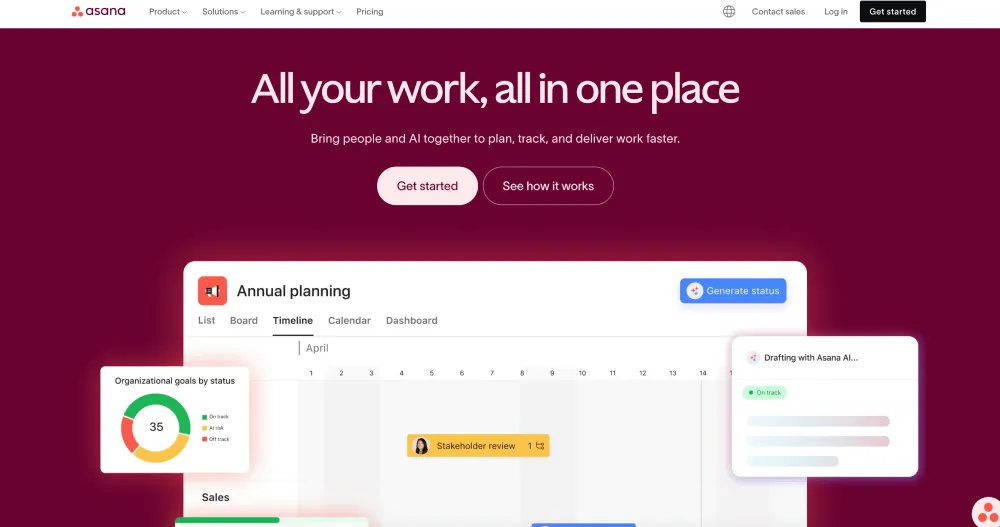
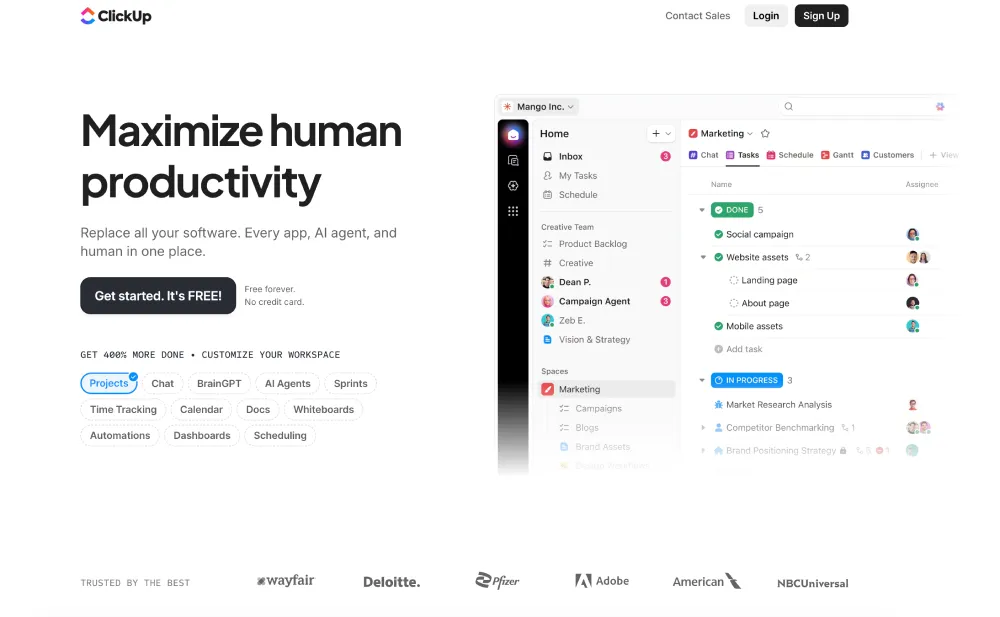
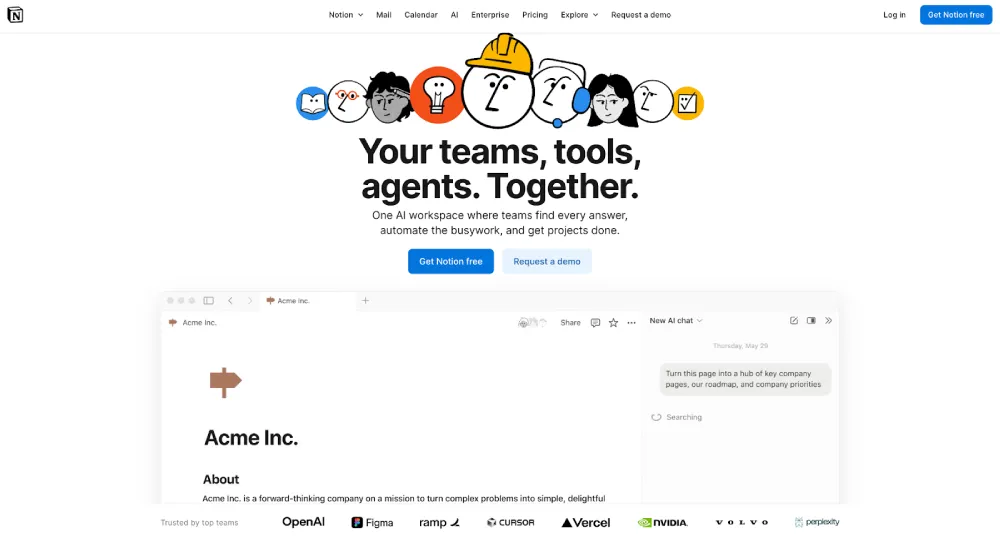
Start by setting SMART goals — specific, measurable, achievable, relevant, and time-bound.
You can also use KPIs (Key Performance Indicators) or OKRs (Objectives and Key Results) to stay aligned across your team.
For Example:
“Reach 50,000 app downloads in six months.”
“Increase qualified leads by 30% in one quarter.”
“Reduce customer acquisition cost (CAC) by 20%.”
Source: Asana
Source: ClickUp
Source: Notion
The goal is to keep everyone on the same page — from marketing and sales to product and customer support.
When your goals are clear and your processes are consistent, execution becomes faster, accountability improves, and your GTM strategy stays on track from day one.
Go-To-Market Strategy Examples
Let’s look at how some top brands used their go-to-market strategies to grow faster and smarter.
Each one followed the same GTM principles — clear audience, focused channels, and consistent execution — but applied them differently.
Oatly
Source: Oatly
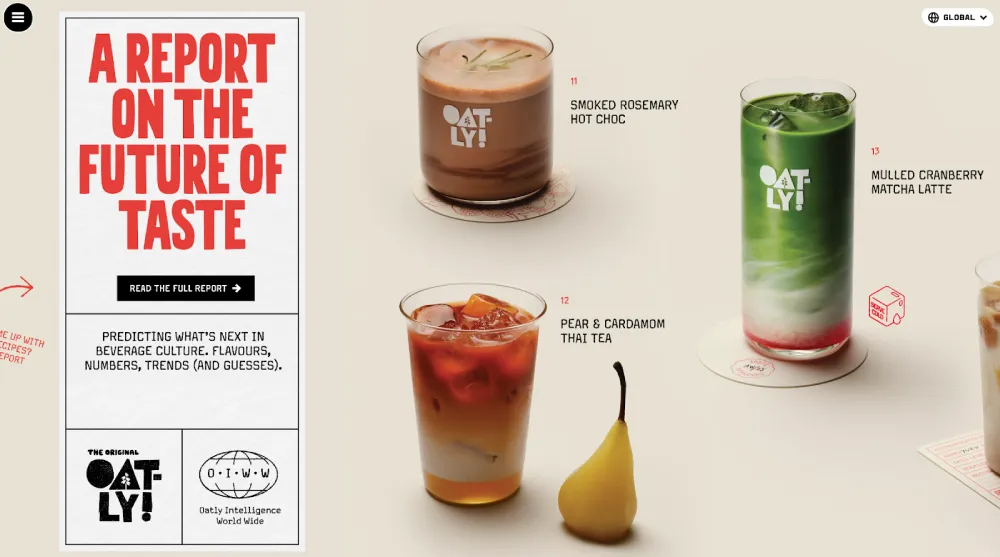
Oatly didn’t launch with billboards or celebrity ads.
Instead, it partnered with local coffee shops to reach baristas and latte drinkers directly.
This simple, targeted move gave the brand instant credibility and organic word-of-mouth growth — the perfect go-to-market strategy example of community-driven exposure.
Peloton
Source: Peloton
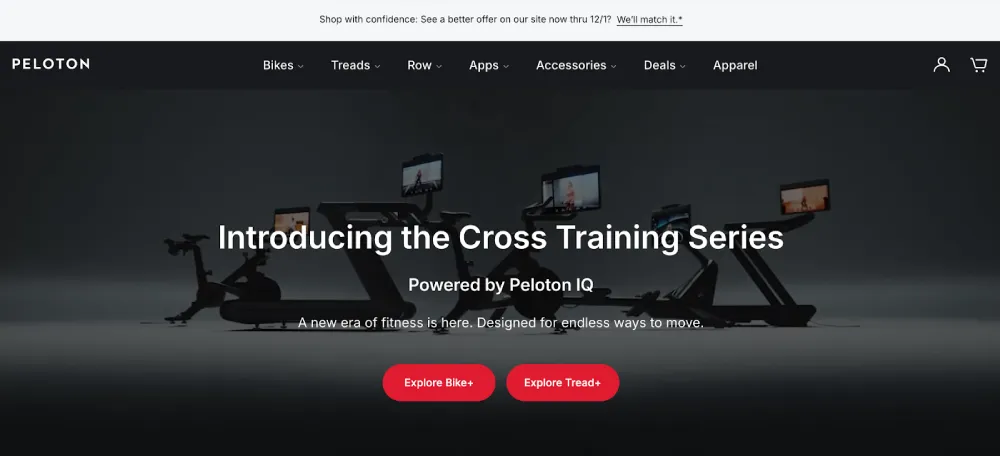
Peloton built a premium go-to-market plan that combined online marketing with high-end retail showrooms.
Even though most customers purchased online, the showrooms allowed them to try the bikes in person — turning curiosity into commitment.
It’s a great example of blending digital and physical experiences to create trust and desire.
Slack
Source: Slack
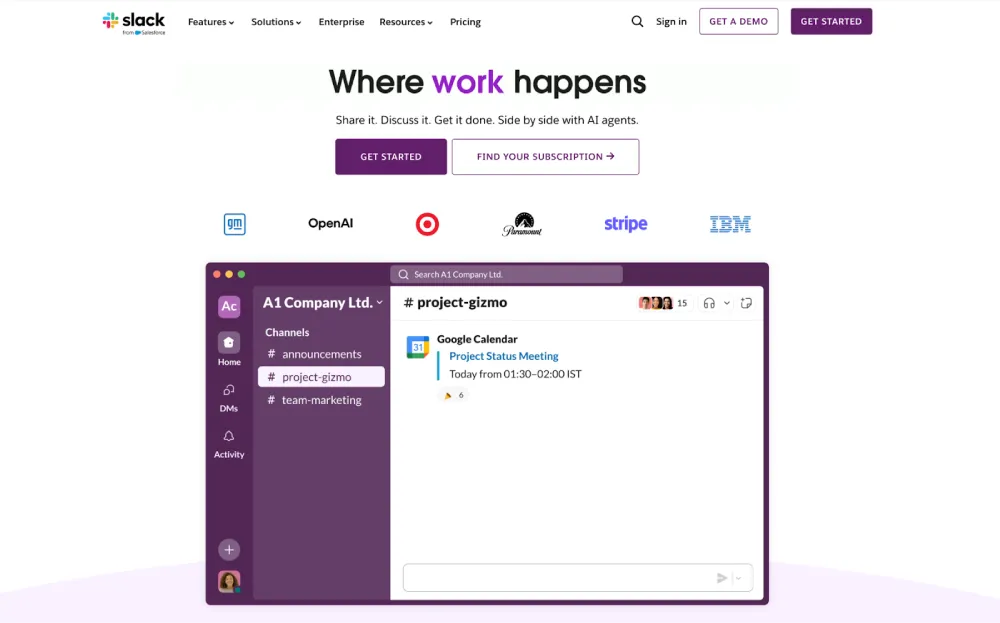
Slack’s B2B GTM strategy was entirely product-led.
They launched a free version (freemium model), let teams try it, and then scaled through internal referrals and integrations.
No heavy advertising — just a great product that sold itself.
This SaaS go-to-market strategy became a playbook for modern B2B startups.
Spotify & Uber

Source: Campaign
Spotify teamed up with Uber to let riders control the music during trips.
This go-to-market strategy for partnerships gave both brands massive visibility and engagement in a single move.
It’s a perfect example of using collaboration to expand reach without extra spend.
Each of these companies built a go-to-market strategy that matched their audience, pricing, and positioning.
That’s what makes a GTM plan powerful — it’s not about size, it’s about strategy.
Go-To-Market Strategy Templates
A solid go-to-market strategy template can save you weeks of planning.
It keeps your ideas structured, ensures you cover every component, and helps your team stay aligned.
You can build one from scratch or use editable GTM templates in Google Sheets, Slides, or Notion.
At a minimum, your go-to-market plan template should include these key sections:
- Target Audience: Define your ideal customer segments and their needs.
- Key Messaging: Clarify what you’re selling and why it matters.
- Marketing Channels: List where you’ll promote — SEO, social media, email, paid ads, or partnerships.
- Sales Plan: Define your sales model — self-service, inside sales, field sales, or channel partners.
- Metrics & Reporting: Set measurable KPIs like CAC, conversion rate, and retention.
If you’re creating a B2B GTM strategy template or a SaaS go-to-market plan, add specific fields for pricing models, user onboarding, and churn reduction.
Templates don’t replace strategy — they make it repeatable.
Once you’ve built a structure that works, you can adapt it for every new product, launch, or market expansion with confidence.
How to Choose the Right Go-To-Market (GTM) Approach
Not every business needs the same go-to-market framework.
Your approach should match your goals, budget, and target audience.
Here’s how to choose the right one for your business:
1. For Wide Reach and Brand Awareness
Use this go-to-market strategy if you want a wide reach and brand awareness.
Focus on guiding prospects through a structured funnel — from awareness (SEO and ads) to consideration (webinars, case studies) to conversion (offers and demos).
Perfect for consumer brands or new product launches.
2. For Enterprise or B2B Clients
If you’re running a B2B GTM strategy, focus on Account-Based Marketing (ABM) and partnerships.
Target high-value accounts with personalised outreach and strategic collaborations.
This model works best for service providers, consultants, or SaaS companies selling to larger organisations.
3. For Fast Organic Growth
A product-led go-to-market strategy lets your product sell itself.
Think of brands like Slack or Dropbox that offer freemium access to attract users, then scale through engagement and referrals.
The flywheel model focuses on delighting customers so they fuel word-of-mouth growth — ideal for startups or software businesses.
4. For Lean Budgets
When resources are limited, invest in SEO, content marketing, and email automation.
This low-cost go-to-market strategy helps you build authority, generate inbound leads, and grow consistently without large ad spend.
It’s one of the best long-term go-to-market strategies for small and mid-sized businesses.
Each approach can work — what matters is alignment.
Your GTM plan should always reflect your stage of growth, target audience, and available resources.
Also Read: SEO for Real Estate Agents: How to Rank #1 on Google & Generate Free Leads
Marketing Research & Strategy
We help you understand your market and build smart strategies to attract more customers and grow faster.
- Detailed research into your competitors, customers, and market
- Custom marketing and growth plans that drive real results
- Clear action steps to increase traffic, leads, and sales
ADWORDS ROI
Cut Ad spend
Common Go-To-Market (GTM) Mistakes to Avoid
Even great go-to-market strategies can fail if execution slips.
Here are the most common mistakes businesses make — and how to avoid them:
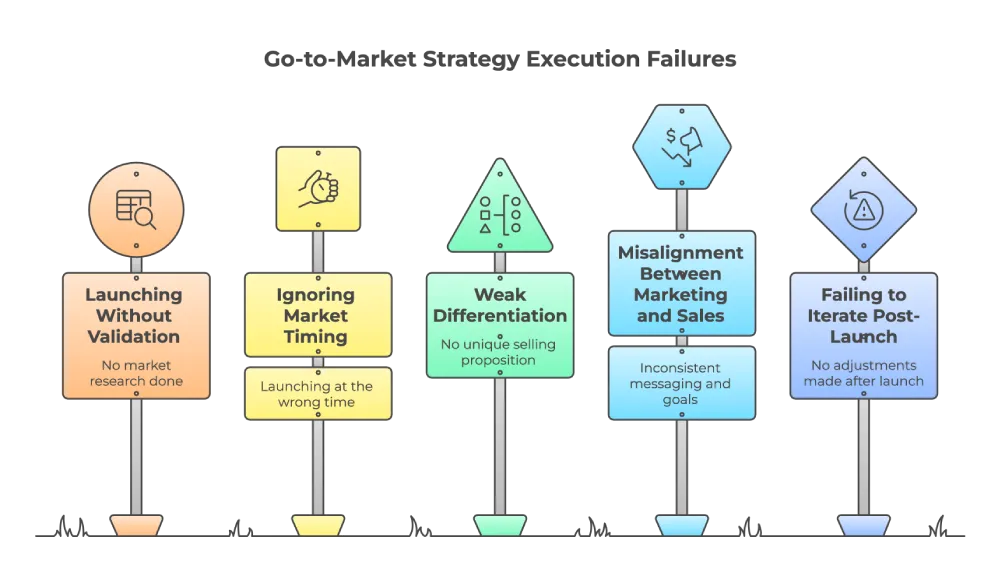
1. Launching Without Validation
Skipping customer research or product testing is one of the biggest causes of launch failure.
Validate your idea early — through surveys, beta tests, or pilot launches — before investing in full-scale execution.
2. Ignoring Market Timing
A perfect product at the wrong time still fails.
Keep an eye on market trends, competitor activity, and customer sentiment before you go live.
3. Weak Differentiation
If your message sounds like everyone else’s, customers won’t remember you.
Your go-to-market strategy must clearly communicate what makes you different — faster, simpler, more reliable, or more affordable.
4. Misalignment Between Marketing and Sales
When sales and marketing teams work in silos, leads fall through.
Create shared goals and reporting metrics in your go-to-market plan to keep both teams in sync.
5. Failing to Iterate Post-Launch
A GTM plan doesn’t end after launch.
Collect feedback, track KPIs, and refine your approach continuously.
Markets change — your go-to-market framework should too.
Avoiding these mistakes can save you months of rework and missed opportunities.
A successful go-to-market strategy is never static — it evolves with your business, audience, and market reality.
Digital Marketing, SEO & PPC
- SEO to boost rankings and capture high-intent, AI-driven traffic
- Performance Marketing to run ROI-focused campaigns that convert
- Content Marketing to drive clicks, earn links, and build authority
Want Your Go-To-Market Plan to Actually Drive Sales?
A solid GTM strategy is just the start — execution is where the results happen.
At Credofy, we help businesses turn strategy into real revenue through targeted ads, high-converting websites, and conversion-focused marketing.
Book your free 60-minute 1:1 strategy call now, and know how to generate quality leads, lower ad costs, and turn your GTM plan into real sales growth.
Frequently Asked Questions related to SEO
What does a Go-To-Market (GTM) strategy mean?
A go-to-market strategy is a detailed plan that defines how a business will bring a product or service to market and connect it with the right customers.
It covers everything from identifying your audience and crafting your message to choosing sales channels and marketing tactics.
In short, it’s your roadmap to launch and grow successfully.
What is the purpose of a Go-To-Market strategy?
The purpose of a GTM strategy is to reduce risk and improve execution when launching something new.
It ensures your product, marketing, and sales all move in the same direction — toward a specific business goal.
A clear GTM plan helps you reach the right audience faster, position your offer effectively, and use your budget wisely.
What should a Go-To-Market strategy include?
A complete GTM strategy should include:
- Defined business goals and success metrics
- A clear target audience and market segmentation
- Strong value proposition and messaging
- Sales strategy and pricing model
- Chosen marketing channels
- Customer journey map
- KPIs and performance tracking process
These elements work together to make your launch structured and measurable.
What are the types of Go-To-Market strategies?
The main types of GTM strategies are:
- Product-led (your product drives acquisition and growth)
- Sales-led (sales reps lead outreach and conversion)
- Marketing-led (brand awareness and inbound demand generation)
- Channel-led (selling through partners or distributors)
Many businesses combine these models depending on their product, price point, and audience.
How is a Go-To-Market strategy different from a Marketing Plan?
A marketing plan focuses mainly on promotion — how you’ll attract and engage customers.
A go-to-market strategy, on the other hand, covers the entire launch process — from positioning and pricing to sales models and customer onboarding.
Think of it like this: the marketing plan is one part of the bigger GTM puzzle.
How to create a Go-To-Market strategy for a new product?
To build a GTM strategy for a new product:
- Define your business goals.
- Identify the problem you’re solving.
- Segment your target market.
- Research competition and market demand.
- Craft your value proposition and messaging.
- Map the customer journey.
- Choose your sales and marketing channels.
- Set your pricing and launch KPIs.
This step-by-step approach ensures you enter the market with focus, clarity, and confidence.


