
Google Ads vs Facebook Ads: Which One Generates Better Leads in 2026?

Google Ads versus Facebook Ads for leads
Table of Contents
Serious about growing your business? Let’s plan exactly how to get you more leads, sales, and results—faster.
If you’re a business owner trying to generate leads online, this question comes up quickly: should you invest in Google Ads or Facebook Ads?
Both platforms are effective. Both can drive consistent leads. But they work in fundamentally different ways, and that’s what determines your results.
Most comparisons focus on features or generic pros and cons. That doesn’t help when you’re deciding where to spend your budget.
The real question is simple: which platform fits your situation better?
In 2026, this choice matters more than ever.
Ad costs are rising, competition is stronger, and users are more selective about what they click.
The data reflects this. Google Ads continues to deliver high-intent traffic, with average conversion rates across industries around 7% or more.
Facebook Ads typically offer a lower cost per click, making it easier to generate leads at scale, but those leads often need more follow-up before they convert.
So instead of treating this as a basic comparison, think of it as a strategic decision.
- Google Ads captures existing demand.
- Facebook Ads create new demand.
Once you understand that, choosing the right platform becomes much easier.
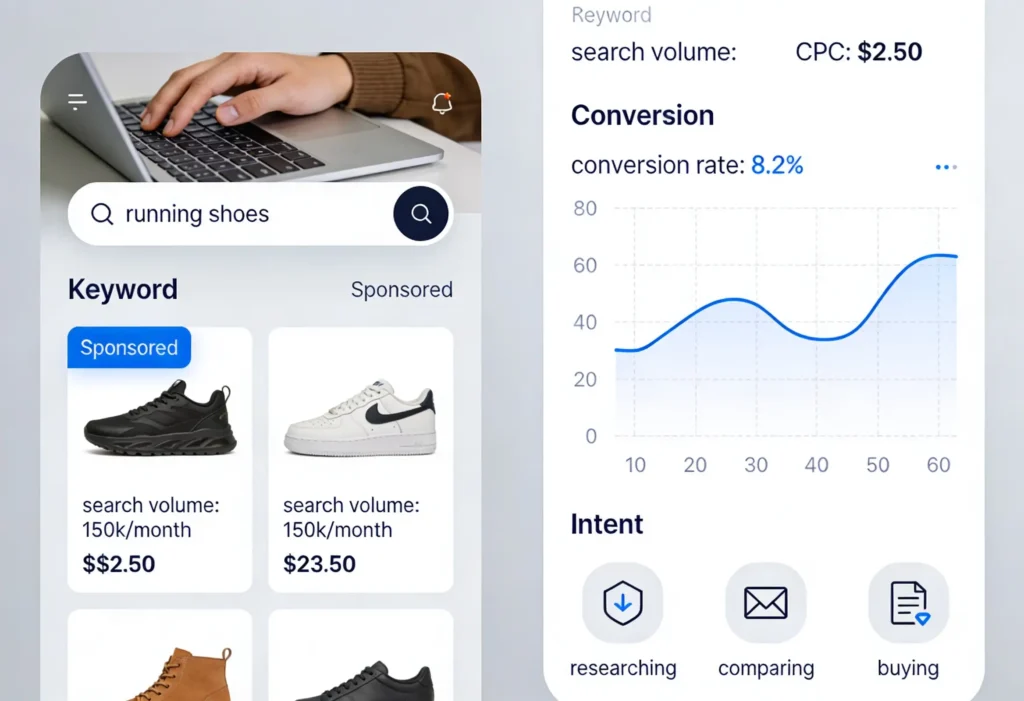
Google Ads vs Facebook Ads – Quick Comparison
Before we go deeper, here’s a simple side-by-side comparison to give you clarity.
| Factor | Google Ads | Facebook Ads |
|---|---|---|
| Intent Level | High — users are actively searching for a solution | Low to medium — users are browsing and discovering |
| Cost Per Lead (CPL) | Typically higher due to competition | Generally lower, easier to generate volume |
| Lead Quality | Strong — users are closer to making a decision | Moderate — requires follow-up and nurturing |
| Conversion Speed | Faster — conversions can happen quickly | Slower — multiple touchpoints are often needed |
| Scalability | Limited by search demand | Highly scalable with large audience reach |
| Best For | High-intent services, local businesses, B2B | Awareness, e-commerce, coaching, SaaS |
What this table shows is a clear pattern.
Google Ads is driven by intent. People go to Google because they are already looking for something. That makes it one of the most effective channels for capturing ready-to-buy leads.
Facebook Ads work differently. It places your offer in front of people who may not be actively searching but match your target audience.
That makes it powerful for building demand and generating interest at scale.
This is why you’ll often see businesses getting cheaper leads from Facebook, but higher-quality leads from Google.
Understanding this difference is key because it directly affects your cost per lead, your conversion rate, and ultimately your return on investment.
In the next section, we’ll break down when each platform works best, so as a business owner, you can make a more informed decision.
Related Read: How Much Do Google Ads Cost in 2025? A Complete Guide to CPC, Budgets & ROI

Google Ads for Lead Generation (When It Works Best)
Google Ads works best when people already know what they’re looking for and are actively searching for a solution.
That’s what makes it one of the most effective platforms for lead generation. You’re not trying to convince someone to care—you’re simply showing up when they already do.
For example, a user searching for “best CRM software for small business” or “property investment opportunities near me” already has intent. Your role is to capture that demand at the right moment.
This is why Google Ads consistently delivers some of the highest-quality leads across industries.
From a data standpoint, Google Ads continues to outperform in intent-driven conversions.
The average conversion rate across industries is around 7%–8%, with some high-intent sectors performing even better.
At the same time, the average cost per lead can be significantly higher, often ranging between $50 to $100+, depending on the industry.
This highlights the trade-off: you pay more, but you get leads that are much closer to converting.
Pros of Google Ads
- High-intent leads who are actively searching for a solution
- Higher conversion rates (around 7%+ on average across industries)
- Fast results once campaigns are live
- Strong performance for high-ticket and service-based businesses
- Precise keyword targeting aligned with user intent
- Higher likelihood of converting into paying customers
Cons of Google Ads
- Higher cost per click, often averaging $2–$5+ across industries
- Higher cost per lead compared to social platforms
- Limited scalability due to dependence on search demand
- High competition for valuable keywords increases costs
- Requires strong landing pages and conversion optimisation
- Poor targeting or setup can lead to rapid budget loss
Mini Takeaway
Google Ads works best when your audience is already searching for your service and ready to take action, making it ideal for capturing high-intent leads quickly.
Digital Marketing, SEO & PPC
- SEO to boost rankings and capture high-intent, AI-driven traffic
- Performance Marketing to run ROI-focused campaigns that convert
- Content Marketing to drive clicks, earn links, and build authority
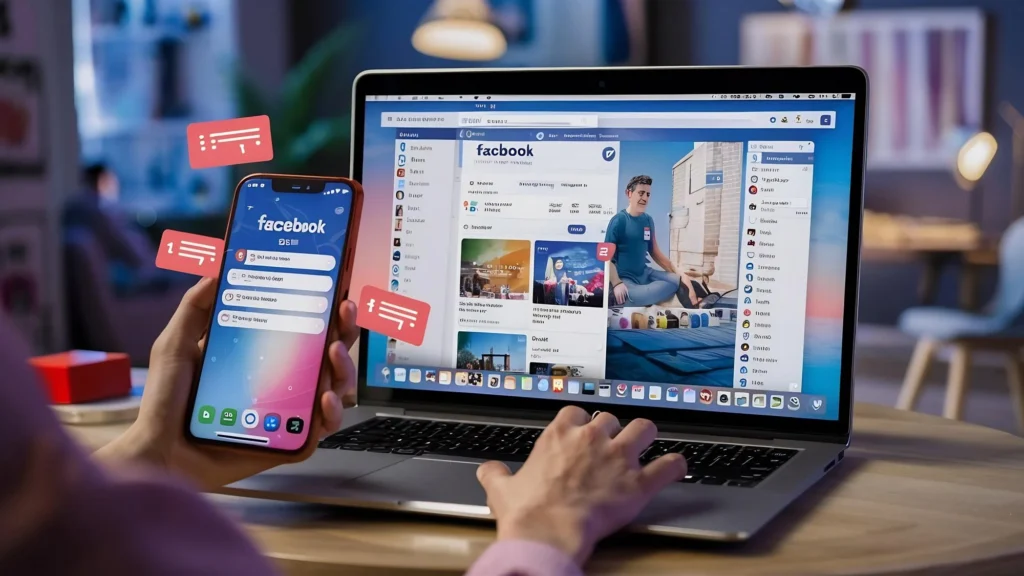
Facebook Ads for Lead Generation (When It Works Best)
Facebook Ads works best when your audience isn’t actively searching but still fits your target profile.
Instead of waiting for demand, it helps you create it. Your ads appear in front of users based on their interests, behaviour, and demographics—often before they even realise they need your service.
That’s why it’s widely used for scaling lead generation, especially in competitive markets where search demand is limited.
From a data perspective, Facebook Ads continues to be one of the most cost-effective channels. As of Oct 2025, the average cost per lead is $27.66. significantly lower than Google Ads in many industries.
At the same time, average conversion rates for lead campaigns sit around 7.2%–8%, depending on targeting and industry.
This explains why many businesses use Facebook to generate volume—but rely on other channels to convert that demand.
Pros of Facebook Ads
- Lower cost per lead (around $27 on average across industries)
- Advanced audience targeting using interests, behaviours, and demographics
- Strong for demand generation when users aren’t actively searching
- Powerful retargeting (you can re-engage website visitors and past interactions)
- Highly scalable with the ability to reach large audiences quickly
- Lower cost per click, often around $1–$2 in many industries
Cons of Facebook Ads
- Lower intent leads since users are not actively searching
- Lower direct conversion rates compared to high-intent channels like Google
- Requires strong creatives and messaging to capture attention
- Longer conversion journey with multiple touchpoints needed
- Increasing competition has pushed costs up (CPL has risen ~21% year-on-year)
Mini Takeaway
Facebook Ads works best when your goal is to generate awareness, capture interest, and nurture leads over time rather than convert instantly.
Also Read: 20 Advanced Lead Generation Strategies to Secure High-Quality Leads in 2025

Google Ads vs Facebook Ads Cost: Which Actually Delivers Better ROI?
When businesses compare Google Ads vs Facebook Ads, the first thing they usually look at is cost per lead.
It feels logical. If one platform is giving you cheaper leads, it should be the better option.
But in most cases, that thinking leads to poor decisions.
Because cost per lead only tells you how much you paid to generate interest. It doesn’t tell you whether that interest turns into actual revenue.
And that’s where the real difference between these platforms shows up.
To understand cost properly, you first need to understand how each platform generates leads.
Google Ads captures people who are actively searching. These users already have intent. They are closer to making a decision and are often comparing options.
Facebook Ads works differently. It targets users based on interests and behaviour, not intent. These users may fit your ideal customer profile, but they are not necessarily looking for your service at that moment.
This is why you’ll often see a clear pattern:
Google Ads tends to generate fewer leads, but those leads are more qualified.
Facebook Ads tends to generate more leads, but they require more follow-up before they convert.
Marketing Research & Strategy
We help you understand your market and build smart strategies to attract more customers and grow faster.
- Detailed research into your competitors, customers, and market
- Custom marketing and growth plans that drive real results
- Clear action steps to increase traffic, leads, and sales

ADWORDS ROI

Cut Ad spend
CPL is one of the most commonly tracked metrics in advertising, but it’s also one of the most misunderstood.
A lower CPL doesn’t automatically mean better performance.
For example, you might generate 100 leads from Facebook Ads at a low cost, but if only a small percentage of those leads convert, the actual return is limited.
On the other hand, Google Ads might bring in fewer leads at a higher cost, but if a larger portion of those leads convert into paying customers, the overall return can be significantly higher.
This is why businesses that focus only on reducing CPL often end up scaling the wrong campaigns.
If your goal is to generate real business growth, there are three metrics that matter far more than cost per lead.
Conversion rate is the first. It tells you how many leads actually turn into customers. Platforms with higher intent naturally perform better here.
Lead quality is the second. Not all leads are equal. Some are ready to buy, while others are just exploring.
Customer value is the third. If your average deal size is high, even a small number of conversions can justify a higher cost per lead.
When you look at these three together, the picture becomes much clearer.
Instead of asking which platform is cheaper, it’s more useful to look at how each one contributes to your sales process.
Google Ads is typically more effective when you want to capture demand and convert leads quickly. It works well when users already understand their problem and are actively searching for a solution.
Facebook Ads is more effective when you want to generate demand and reach a wider audience. It works best when you have a strong follow-up system in place to nurture leads over time.
This is why many businesses use both platforms together, rather than choosing one over the other.
Cost per lead is only one part of the equation, and on its own, it can be misleading.
The real goal is not to generate cheaper leads, but to generate leads that turn into revenue.
Once you shift your focus from cost to return, the decision between Google Ads and Facebook Ads becomes much clearer.
Read More: Why You’re Not Getting Enough Quality Real Estate Leads (2025–2026)
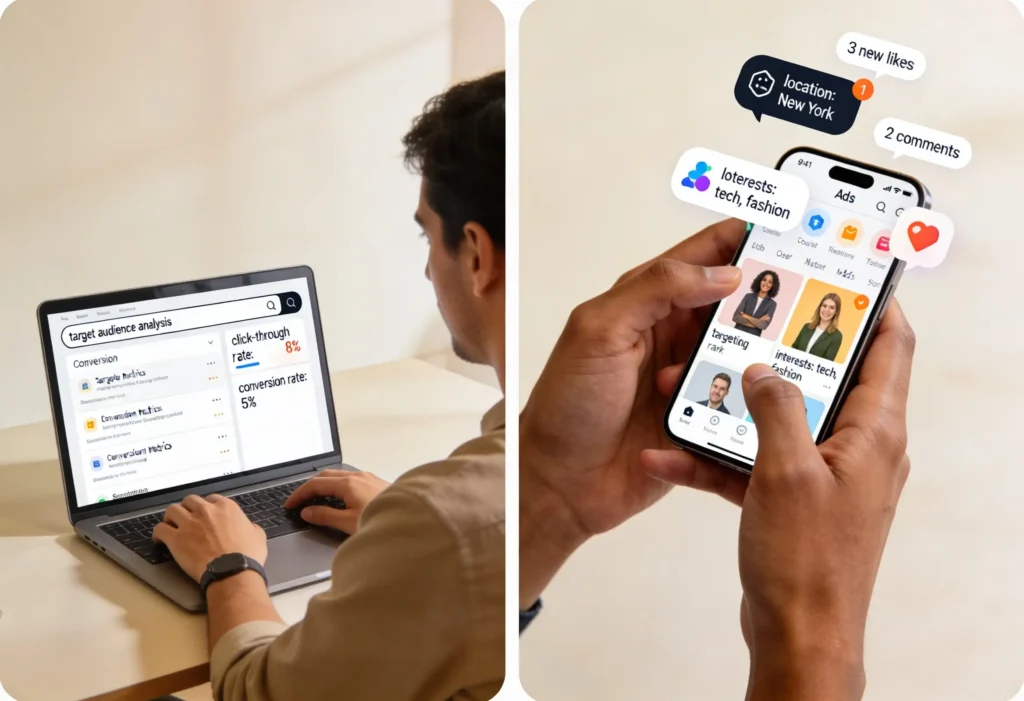
Google Ads vs Facebook Ads – Which Should You Choose?
By this point, it should be clear that both platforms work—but they solve different problems.
The right choice depends on where your audience is in their buying journey and how your business converts leads.
Instead of looking for a single winner, it’s more useful to match the platform to your goal.
Choose Google Ads if…
Google Ads is the better option when your priority is to capture demand and convert leads quickly.
It works best when:
- You want leads who are actively searching and ready to take action
- You offer high-ticket services where lead quality matters more than volume
- You need faster conversions without a long nurturing process
- Your service solves a clear, immediate problem people search for
In these cases, Google Ads can bring in fewer leads, but those leads are more likely to convert into paying customers.
Choose Facebook Ads if…
Facebook Ads is the better choice when your goal is to generate demand and reach a broader audience.
It works well when:
- You want to generate a higher volume of leads at a lower cost
- Your audience isn’t actively searching for your service yet
- Your offer requires education, awareness, or positioning
- You have strong creatives and a follow-up system to nurture leads
In these situations, Facebook Ads helps you build interest and capture leads earlier in the decision-making process.

Use Both if You Want Consistent Growth
For most businesses, the best results don’t come from choosing one platform—they come from combining both.
Each platform plays a different role in the funnel:
- Facebook Ads introduces your brand and builds initial interest
- Google Ads captures high-intent users who are ready to convert
This approach allows you to reach potential customers at multiple stages, rather than relying on a single touchpoint.
In short, there isn’t a universal answer to which platform is better.
The right choice depends on your audience, your offer, and how your sales process works.
Once you align those factors, the decision becomes much more straightforward—and your campaigns perform much better as a result.
Digital Marketing, SEO & PPC
- SEO to boost rankings and capture high-intent, AI-driven traffic
- Performance Marketing to run ROI-focused campaigns that convert
- Content Marketing to drive clicks, earn links, and build authority
Conclusion: It’s Not the Platform, It’s the Strategy
There is no single platform that works best for every business.
Google Ads and Facebook Ads are built for different purposes. One captures intent, the other creates it. Both can generate leads, but only when used in the right context.
The real difference in performance comes down to three things.
First, intent. Are you targeting people who are already looking, or those who need to be convinced?
Second, your funnel. Do you have a system in place to convert or nurture leads effectively?
Third, your offer. Is it clear, relevant, and compelling enough for someone to take action?
When these three align, either platform can work. When they don’t, even the best campaigns struggle.
The businesses that get consistent results are not the ones chasing platforms. They are the ones building the right strategy behind them.
Marketing Research & Strategy
We help you understand your market and build smart strategies to attract more customers and grow faster.
- Detailed research into your competitors, customers, and market
- Custom marketing and growth plans that drive real results
- Clear action steps to increase traffic, leads, and sales
ADWORDS ROI
Cut Ad spend
Want More Leads From Ads?
If you’re already running ads but not seeing consistent results, the issue is rarely the platform. It’s usually where the strategy breaks down.
It could be wasted on the wrong audience, weak messaging, or a funnel that isn’t converting.
In a 1:1 strategy call, we’ll:
- Audit your current campaigns and identify what’s not working
- Highlight missed opportunities that are costing you leads
- Show you how to reduce cost per lead while improving conversions
Frequently Asked Questions
Do Google Ads work better than Facebook Ads?
Google Ads works better when people are actively searching for a product or service, which means the leads are usually more ready to convert.
Facebook Ads works better for reaching new audiences and generating interest. Neither is universally better, the right choice depends on your business goal and where your audience is in the buying journey.
Is $20 a day good for Google Ads?
Yes, $20 a day can work for Google Ads, especially in less competitive niches or local campaigns. However, in high-competition industries, this budget may limit results. It’s best used for testing keywords, gathering data, and optimising before scaling your budget.
Who are the big 3 of online advertising?
The three biggest players in online advertising are:
- Google Ads (search and display advertising)
- Facebook Ads (including Instagram)
- Amazon Ads (product-based advertising)
These platforms dominate digital ad spend because they control large user bases and data.
How much do 1000 Facebook ads cost?
The cost of 1,000 impressions (CPM) on Facebook typically ranges between $5 to $15, depending on your audience, industry, and competition. Costs can be higher in competitive markets or during peak seasons.
Are Google Ads still profitable?
Yes, Google Ads is still highly profitable when managed correctly. Since it targets users with high intent, businesses can generate strong ROI. Profitability depends on factors like keyword selection, landing page quality, and conversion tracking.
How much do Google Ads pay per 1000 views?
Google Ads doesn’t “pay” per 1,000 views unless you’re running display or YouTube campaigns using CPM bidding. In those cases, CPM typically ranges from $1 to $10+, depending on targeting and placement.
Can we get leads from Google Ads?
Yes, Google Ads is one of the most effective platforms for lead generation. It captures users who are actively searching, which means the leads are often more qualified and ready to take action.
How much do Google Ads cost per lead?
The cost per lead from Google Ads varies by industry but typically ranges between $50 to $100+. In competitive sectors like legal or real estate, it can be significantly higher. However, these leads are usually higher quality.
Google Ads vs Facebook Ads: Which is better for your business?
Google Ads is better if you want high-intent leads and faster conversions. Facebook Ads is better if you want to reach a larger audience at a lower cost and build demand. Many businesses see the best results by using both together.
What’s better: Google Ads or Facebook Ads?
It depends on your goal. Google Ads is better for capturing demand, while Facebook Ads is better for creating demand. The best results come from using the right platform at the right stage of the customer journey.