
The Only On-Page SEO Checklist You Need in 2026 (The Complete Guide)

The 2026 On-Page SEO Checklist (Quick Action List)
Table of Contents
Serious about growing your business? Let’s plan exactly how to get you more leads, sales, and results—faster.
In 2026, strong on-page SEO is less about squeezing in keywords and more about creating pages that match intent, explain the topic clearly, and give users a better experience than the alternatives.
Google is getting better at spotting the difference between content that is merely optimised and content that is genuinely useful.
That is what this guide is built to help you do.
It will walk you through the checks that matter most today, from structure and clarity to relevance, usability, and trust.
Whether you are improving old pages or creating new ones, this checklist will help you make smarter decisions and build content that has a much better chance of ranking and converting.
How On-Page SEO Actually Works in 2026
Search is no longer keyword-first. It is intent, context, and topic depth first.
That shift matters because Google is getting better at understanding what a page is really about, how useful it feels, and whether users stay or return to the results.
At the same time, more searches now end without a website visit at all.
SparkToro’s research found Google answers close to two-thirds of queries without sending a click to the open web, while newer studies show AI Overviews can cut clicks to top-ranking pages by roughly 34.5%, and in some cases, far more.
So the goal is no longer to just rank a page. It is to become the best result for that topic.
In practice, Google is weighing three things more heavily:
- Relevance — does the page fully answer the query? Google’s ranking systems are built to surface the most relevant and useful results.
- Experience — is the page fast, clear, and easy to use? Google says page experience and Core Web Vitals can contribute to success when many helpful results are similar.
- Helpfulness and trust — is the content created for people, not just rankings? Google’s guidance is explicit here: its systems prioritise helpful, reliable, people-first content.
That is what this checklist is built to help you do: move from chasing keywords to covering topics properly, improving both the click and what happens after it, and building pages that work for AI search as well as human readers.
Digital Marketing, SEO & PPC
- SEO to boost rankings and capture high-intent, AI-driven traffic
- Performance Marketing to run ROI-focused campaigns that convert
- Content Marketing to drive clicks, earn links, and build authority
Nail Search Intent (This Decides Everything)
Most pages do not fail because they are poorly written. They fail because they solve the wrong problem.
That is why search intent comes first. Before you think about headings, internal links, or on-page optimisation, you need to understand what the user actually wants.
Google itself says SEO starts with helping search engines understand your content and helping users decide whether your page is what they need.
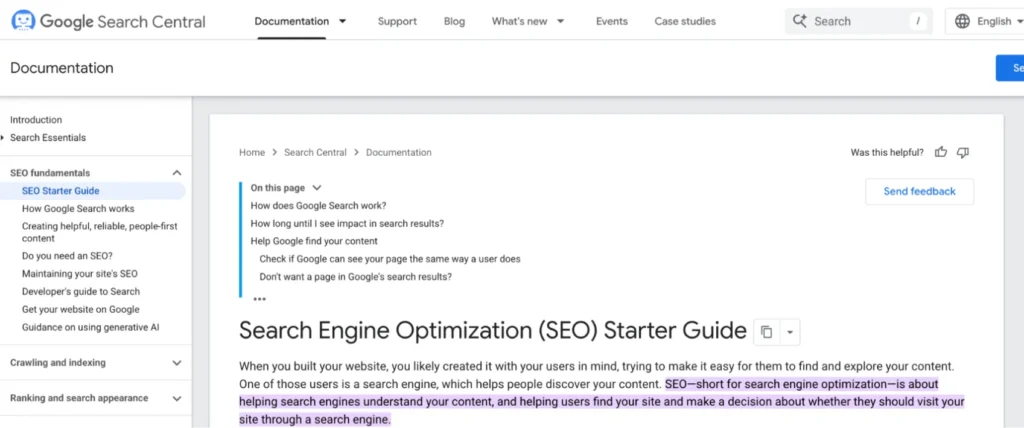
Source: Google Developers
It also says 15% of searches it sees every day are new, which is exactly why matching meaning matters more than matching exact wording.
Identify the Real Intent Behind the Keyword
Start by asking a simple question: What is the user trying to do?
Usually, the intent falls into four buckets:
- informational
- transactional
- navigational
- commercial investigation
The mistake is assuming the keyword tells you enough. It often does not. A search term may look informational, but the results may show product pages, calculators, comparison posts, or local service pages instead.
So do not just study the keyword.
Study what Google is rewarding for it.
That tells you what users are most likely expecting.
Reverse-Engineer the SERP
The search results already show you the winning format.
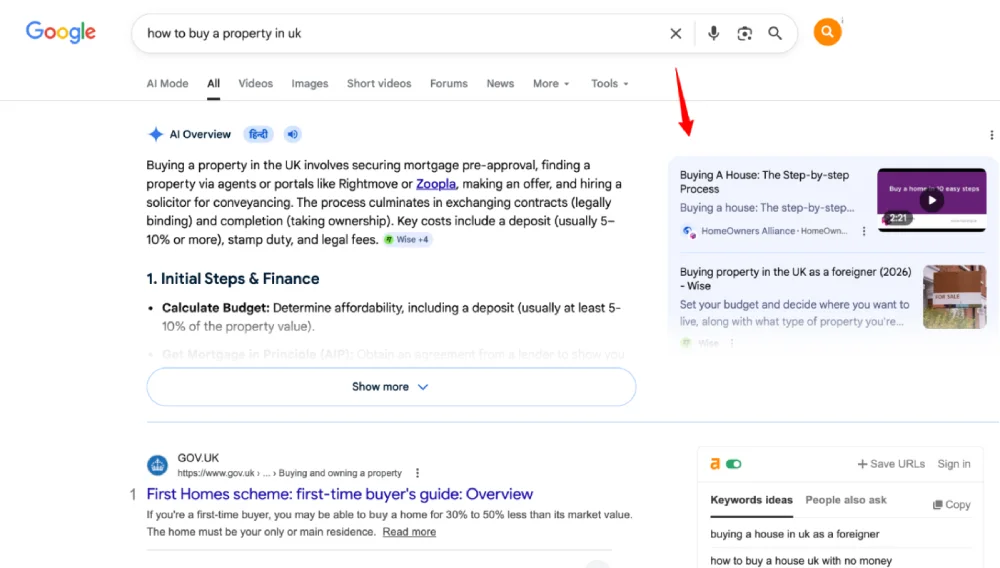
Look at the top-ranking pages and check:
- whether Google prefers guides, landing pages, videos, comparison posts, or tools
- whether the SERP includes AI Overviews, featured snippets, People Also Ask, or rich results
- how much detail the top pages cover
- what questions, examples, or proof points keep appearing
Google’s own documentation shows how features like featured snippets and structured results change what users see before they ever click.
That means format matters almost as much as content itself. If the SERP is full of tools or calculators, a plain article may not be enough.
Define Your Content Angle
Once you understand intent, the next question is: why should someone choose your page?
This is where your angle matters. Just a clear reason your page is more useful than the others.
That could be:
- better data
- a stronger framework
- clearer examples
- sharper explanations
- real experience instead of recycled advice
Google’s systems are designed to prioritise helpful, reliable, people-first content.
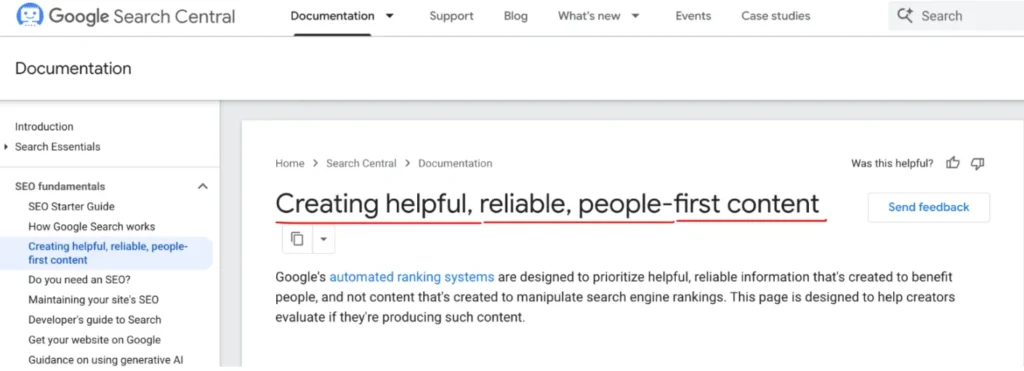
Source: Google Developers
So if your page says the same thing as everyone else, there is very little reason for it to earn attention or hold it. Strong differentiation improves engagement, and engagement gives your content a better chance of keeping its place.
Related Read: 10 Google SEO Guidelines for 2025–2026: Master E-E-A-T & Core Updates to Rank Higher
Build a Page That Deserves to Rank
Long-form content does not win by default anymore. Better content does.
As mentioned earlier, Google’s guidance is clear: it wants helpful, reliable, people-first content, not pages stretched for word count. That means the goal is not to publish more.
It is to create a page that answers the query well, feels easy to follow, and leaves fewer gaps for the reader.
Create a Content Structure That Matches User Thinking
Instead of dumping information in a logical order for you, organise it in a logical order for the reader.
A simple flow usually works best: problem → solution → proof → next step.
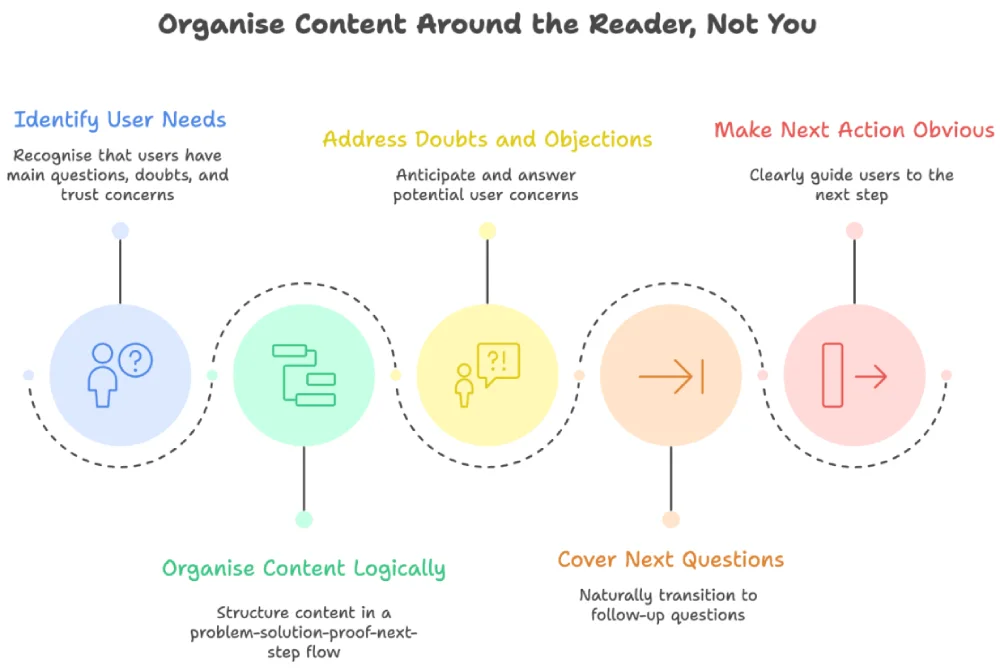
That structure helps because users rarely arrive with one question.
They arrive with a main question, a few doubts, and a silent follow-up: can I trust this?
So your page should not just explain the topic. It should also answer likely objections, cover the next question naturally, and make the next action obvious.
When content is easier to follow, people are more likely to keep reading, scroll further, and engage with the page.
Write High-Quality Content That Actually Satisfies
Clarity beats complexity. Depth beats fluff.
The best pages do not sound smart. They make the topic easy to understand. That usually means using clear explanations, relevant examples, real case studies, and data that adds value.
Google specifically advises creators to focus on content that leaves visitors feeling they have learned enough to achieve their goal.
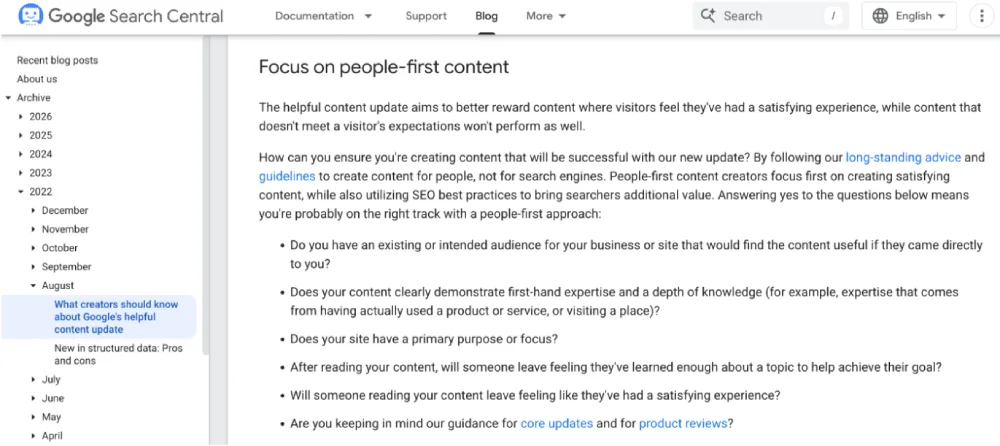
Source: Google Developers
That is a much better standard than word count.
Use Entities, Not Just Keywords
Google does not just read words.
It tries to understand topics, entities, and relationships.
Its Knowledge Graph is built around “things, not strings,” which means Google looks beyond exact keywords to understand people, places, products, services, and how they connect.
Google has also said BERT helps it better understand language and meaning in search, while MUM is used in specific search applications to improve understanding further.
So if your page only repeats one keyword and ignores related topics, subtopics, and contextual terms, it is giving Google a narrow picture of the subject.
That is why strong on-page SEO is now more about topic completeness than keyword density. Cover the core topic properly, include the related ideas users expect, and make the page feel complete rather than padded.
Must Read: 10 Google SEO Guidelines for 2025–2026: Master E-E-A-T & Core Updates to Rank Higher
Smart Optimisation (Without Looking Like SEO)
Good on-page SEO should make a page clearer, not more mechanical.
Use Entities, Not Just Keywords
Your title tag still does two jobs: help Google understand the page and give people a reason to click. Google recommends titles that are clear, concise, and accurately describe the content.
Industry data also shows title tags between 40 and 60 characters tend to earn the highest CTR, so aiming for roughly 50–60 characters is still a smart benchmark.
The best titles usually combine three things: clarity, curiosity, and outcome. Clear enough to match intent. Curious enough to stand out. Specific enough to promise value.
For example:
❌ Property Investment
✅ Property Investment in Manchester: Best Areas for 2026
Write Meta Descriptions That Win the Click
Meta descriptions are not a direct ranking factor, but they still shape whether your result gets chosen.
Google says a good meta description should inform and interest users, and large-scale studies have found that pages with meta descriptions get more clicks on average than pages without them.
So treat the meta description like ad copy. Do not repeat the title. Use it to sell the benefit of the page in a way that matches search intent.
For example:
❌ Learn about property investment
✅ Discover high-yield investment opportunities with strong rental returns in Manchester.
Use Headings to Guide Humans First
Headings are there to make content easier to scan, easier to follow, and easier to understand. Google also uses visible headings and prominent text to better understand page structure, so a clean heading hierarchy helps both readers and search engines.
If your headings make the page easier to skim, they are doing their job. If they sound like forced keywords, they are not.
Example:
❌ Investment Options
✅ Where Should You Invest in Property Right Now?
Optimise URL Slugs for Simplicity
Google recommends simple, descriptive URLs that are easy for people to understand. Shorter URLs also tend to perform better in usability studies and large SEO datasets, likely because they are cleaner, clearer, and easier to share.
That usually means keeping slugs short, readable, and focused. Avoid dates, filler words, and keyword stuffing. A good URL should tell both users and Google what the page is about in a glance.
Example:
❌ /property-investment-in-manchester-2024-best-opportunities-for-investors
✅ /manchester-property-investment
Content Enhancements That Boost Engagement
Useful content is important. Easy-to-process content is what keeps people on the page.
That is where enhancements matter. Visuals do not just make a page look better. They make ideas easier to understand, faster to scan, and harder to abandon.
Some studies have found that content with relevant images can get up to 94% more views, which helps explain why stronger visual pages often hold attention better.
Add Visual Content That Improves Understanding
Use visuals where they remove friction, not where they add decoration.
Diagrams can simplify a process. Screenshots can show exactly what to do. Comparison tables can help users make a decision faster. The point is not to fill space. It is to make the content clearer and more usable, which usually improves engagement.
Optimise Images for SEO + Speed
Heavy images slow pages down, hurt usability, and weaken page experience.
Google supports modern image formats such as WebP and AVIF, and Google’s WebP documentation says these formats can help create smaller images that make the web faster.
That is why image optimisation is not just an image SEO task. It is also a speed task. Compress files, choose the right format, and avoid uploading images that are larger than needed.
Use Internal Linking Strategically
Internal links help Google find pages, understand relationships between them, and crawl your site more effectively.
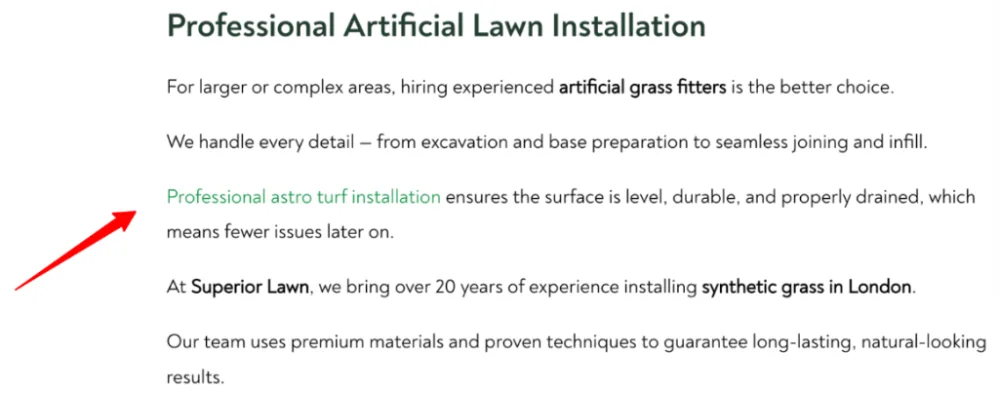
Google explicitly says it uses links to discover pages and as a signal for relevance. Strong internal linking also helps users move deeper into related content instead of stopping after one page.
Add External Links to Build Trust
Linking out to trusted sources can strengthen a page when it adds proof, context, or credibility.
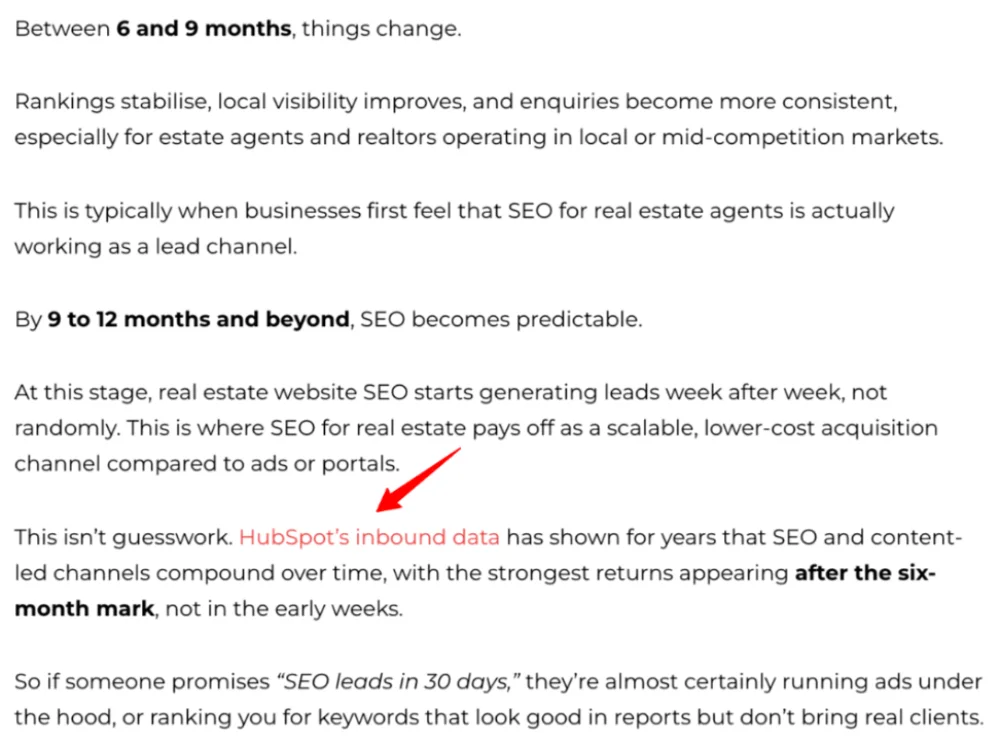
This is especially important when you cite data, explain technical points, or make claims that benefit from evidence. It supports the kind of helpful content Google wants to reward, and it makes your page more trustworthy for readers, too.
UX Signals That Influence Rankings
Google does not use a single “UX score,” but it does reward pages that feel more useful, easier to use, and more satisfying when multiple results are similarly relevant.
Google says page experience can contribute to success in Search, even though relevance still comes first.
Improve Readability and Flow
Good formatting reduces friction.
Short paragraphs, clear subheads, bullet points, and enough spacing make content easier to scan and easier to keep reading.
For this, you can also use tools like Grammarly, it helps you spot awkward phrasing, fix readability issues, and keep your writing clear and easy to follow.
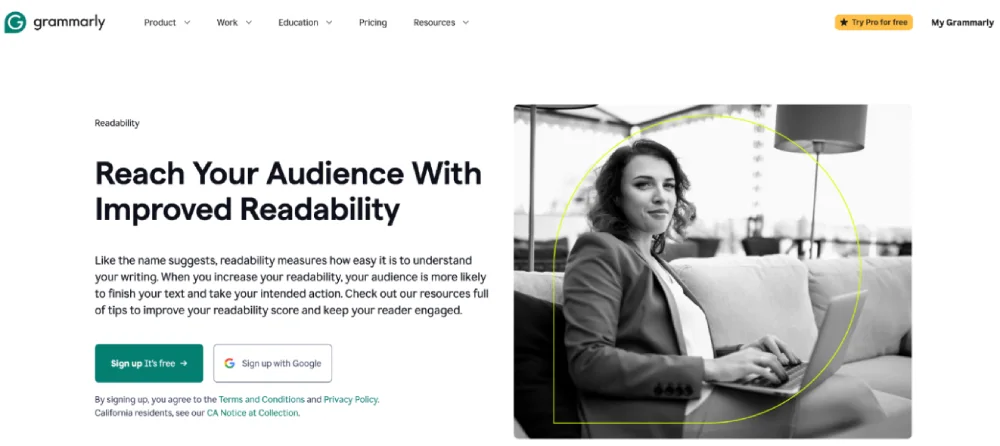
Source: Grammarly
That matters because most users do not read word-for-word. They scan first, then commit. A cleaner layout improves retention simply by making the page feel lighter and faster to consume.
Reduce Bounce Triggers
The first few seconds matter most. If your headline promises one thing and the page opens with something vague, slow, or off-topic, people leave.
Strong pages create a clean match between the query, the title, and the opening section. Google’s people-first content guidance pushes the same idea: satisfy the visitor quickly and clearly.
Optimise for Dwell Time
You cannot force engagement, but you can design for it. Use a strong hook, build curiosity, and move the reader forward with examples and clear progression.
The longer someone stays because the page is genuinely useful, the stronger the experience signals your content sends. That is not about gaming dwell time. It is about making the page worth staying on.
Also Read: Estate Agent SEO 2026: How Top UK Agencies Get 50–300+ Free Google Leads Every Month
Technical On-Page SEO That Actually Matters
Great content can still underperform if the page is slow, hard to use, or difficult for Google to process. Technical on-page SEO does not replace relevance, but it can absolutely limit it.
Page Speed (Core Web Vitals Simplified)
Speed still matters because it shapes experience before the content even has a chance to work.
Google’s Core Web Vitals focus on three things: loading speed (LCP), visual stability (CLS), and responsiveness.
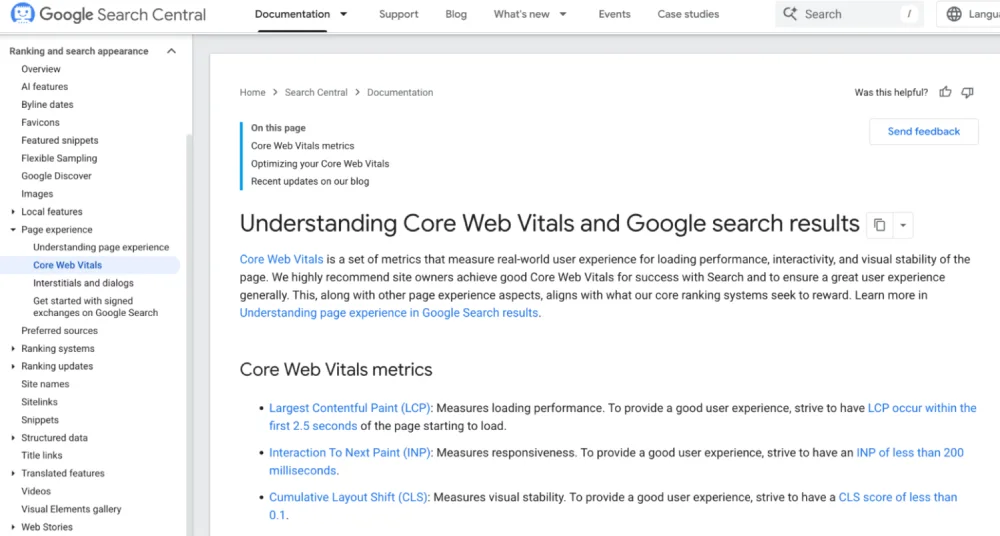
Source: Google Developers
INP became the new responsiveness metric in March 2024, replacing FID. Google also says strong Core Web Vitals support both user experience and success in Search.
Mobile-First Experience
Most searches now happen on mobile. StatCounter’s February 2026 data shows mobile accounts for 52.48% of web usage worldwide.
Google also uses mobile-first indexing, which means it primarily evaluates the mobile version of your site. So if the mobile experience is weak, your rankings can suffer even if the desktop looks fine.
Crawlability Basics
Google cannot rank what it cannot properly access or understand.
Make sure important pages are indexable, internal links are working, and the site structure helps Google move through related pages cleanly.
Technical basics are not flashy, but they remove invisible barriers that block performance.
Google’s own documentation is clear that crawlable links and accessible pages matter for discovery and indexing.
Schema Markup (Where It Actually Helps)
Schema markup does not guarantee higher rankings, but it can improve how your page appears in search.
That includes rich results such as product information and review details, which can increase visibility and make the result more useful before the click.
Just be selective. Google reduced the visibility of FAQ rich results in 2023, so schema is most valuable where it clearly supports the page type and search appearance.
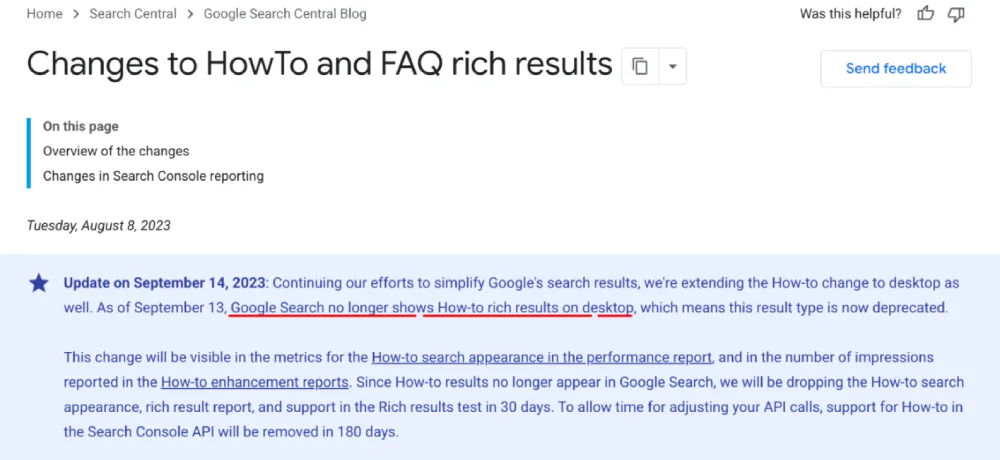
Source: Google Developers
Freshness & Content Lifecycle
Publishing is not the finish line. In many cases, the page that wins is the one that gets improved, not just the one that gets published first.
Google’s core update guidance specifically tells site owners to assess and improve content, not panic and start over. That is the right mindset for on-page SEO too: update what matters, then measure what changes.
When and How to Update Content
You usually do not need a full rewrite.
Start with the parts that age fastest:
- stats
- examples
- outdated sections
- weak intros
- missing questions
- broken or stale references
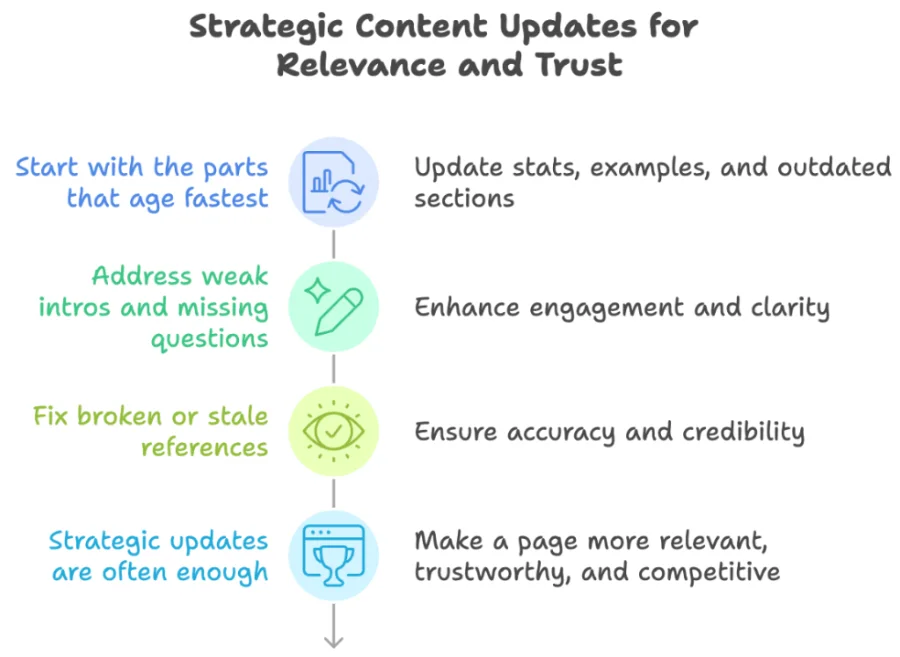
Strategic updates are often enough to make a page more relevant, more trustworthy, and more competitive again.
Track Performance and Improve
Do not guess what needs fixing. Use data.
Google Search Console gives you the clearest signals to watch: clicks, impressions, average CTR, and average position. Those numbers help you see whether the issue is visibility, click appeal, or on-page performance after the click.
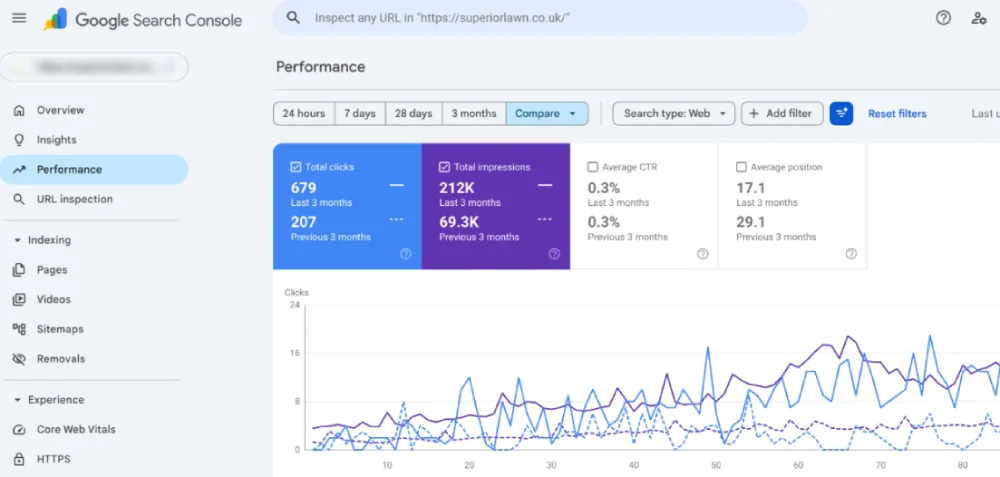
A simple rule works well: update, measure, refine. That is how content stays competitive instead of slowly fading.
Marketing Research & Strategy
We help you understand your market and build smart strategies to attract more customers and grow faster.
- Detailed research into your competitors, customers, and market
- Custom marketing and growth plans that drive real results
- Clear action steps to increase traffic, leads, and sales

ADWORDS ROI

Cut Ad spend
Common On-Page SEO Mistakes That Kill Rankings
- Writing for keywords instead of users
- Over-optimising headings and anchor text
- Ignoring search intent
- Publishing thin content with little depth
- Creating pages that lack examples, proof, or useful detail
- Publishing content and never updating it
- Ignoring AI-shaped search results in 2026
- Focusing on optimisation before usefulness
- Treating on-page SEO as a one-time task
The 2026 On-Page SEO Checklist (Quick Action List)
- Match search intent properly
- Cover the topic fully, not just the keyword
- Write for clarity, usefulness, and flow
- Optimise title tags for clicks and relevance
- Write stronger meta descriptions
- Use a clear heading structure
- Add visuals, examples, and proof
- Improve internal linking
- Link to trusted external sources where relevant
- Make pages fast and mobile-friendly
- Keep pages crawlable and indexable
- Use the schema where it genuinely helps
- Update content regularly
- Track rankings, CTR, and engagement
- Refine pages based on data, not guesswork
Digital Marketing, SEO & PPC
- SEO to boost rankings and capture high-intent, AI-driven traffic
- Performance Marketing to run ROI-focused campaigns that convert
- Content Marketing to drive clicks, earn links, and build authority
Final Thoughts: The New Rule of On-Page SEO
On-page SEO in 2026 is not about doing more. It is about doing what actually matters, better.
Most pages fail not because they miss a tag or a keyword, but because they miss the intent, the clarity, or the experience. The pages that win are the ones that feel complete, useful, and easy to trust from the first scroll to the last.
If you take one thing from this guide, let it be this:
Stop trying to optimise pages. Start trying to build the best result for that search.
Everything else — rankings, traffic, conversions — follows from that.
Get a Clear SEO Strategy for Your Business
A checklist can show you what matters. A strategy shows you what to do next.
If you want better rankings, more qualified traffic, and stronger results from your website, you need more than general advice.
You need to know what is holding your pages back, where the biggest opportunities are, and which changes are most likely to move the needle.
That is where we can help.
Book a free 1:1 strategy call with our SEO experts and get practical guidance as per your specific business.
We will look at your current website, identify key on-page issues, highlight missed opportunities, and help you understand what to prioritise first.
So instead of guessing what to fix, you will leave with a clearer direction and a smarter plan.
Frequently Asked Questions
What are the 4 types of SEO?
The four main types of SEO are on-page SEO, off-page SEO, technical SEO, and local SEO.
On-page SEO focuses on optimising the content and structure of your website so search engines can understand it better.
Off-page SEO is about building authority through backlinks and external signals.
Technical SEO ensures your website is fast, mobile-friendly, and easy for search engines to crawl and index.
Local SEO helps businesses appear in location-based searches, especially through Google Business Profile and local listings.
All four work together to improve visibility and rankings.
What is the difference between on-page and off-page SEO?
On-page SEO focuses on what you control on your website, such as content, headings, structure, and user experience. Off-page SEO focuses on external signals like backlinks, brand mentions, and authority.
In simple terms, on-page SEO helps search engines understand your content, while off-page SEO helps them trust it.
Both are essential, but without strong on-page SEO, off-page efforts are far less effective.
Can ChatGPT do SEO?
ChatGPT can support SEO, but it cannot replace it.
It can help with generating content ideas, structuring articles, and creating first drafts.
However, it does not fully understand your audience, competition, or business goals. It also cannot make strategic decisions based on real performance data.
SEO still requires human input, especially for intent mapping, positioning, and optimisation decisions that actually impact rankings and conversions.
What are on-page SEO tools?
On-page SEO tools are used to analyse and improve how well your website pages are optimised.
Tools like Google Search Console help track performance and indexing. Platforms like Ahrefs and SEMrush provide keyword and content insights. Tools such as Surfer SEO and Frase assist with content optimisation, while Screaming Frog helps identify technical and structural issues.
These tools provide data and suggestions, but they are most effective when used as part of a clear strategy.
What is the 80/20 rule in SEO?
The 80/20 rule in SEO means that a small portion of your efforts usually drives the majority of your results.
In practice, a few high-quality pages often generate most of your traffic and leads. Instead of trying to optimise everything equally, it is more effective to focus on the pages and keywords that have the highest impact.
This approach helps you prioritise effort where it actually moves rankings and results.
How do I improve on-page SEO for my website?
Improving on-page SEO starts with aligning your content with search intent.
From there, focus on making your page clearer, more useful, and easier to navigate. This includes improving content structure, adding relevant examples, optimising titles for clicks, and strengthening internal linking.
You should also ensure your pages load quickly, work well on mobile devices, and are easy for search engines to crawl. The goal is not just optimisation, but creating a page that fully satisfies the user.
How long does on-page SEO take to show results?
On-page SEO improvements can start showing results within a few weeks, but meaningful impact usually takes longer.
Smaller changes may lead to early improvements in 2 to 4 weeks. More noticeable ranking gains typically appear within 1 to 3 months. For competitive keywords and stronger results, it can take 3 to 6 months or more.
The timeline depends on factors like competition, domain authority, and the quality of your changes.
What is included in an on-page SEO audit?
An on-page SEO audit evaluates how well a page is optimised for both search engines and users.
It typically includes reviewing content quality and intent alignment, analysing titles and headings, checking internal linking, and assessing page speed and mobile usability. It also looks at keyword usage, topic coverage, and any technical issues that may affect performance.
The goal of an audit is to identify what is holding the page back and provide clear actions to improve it.